Tower Green
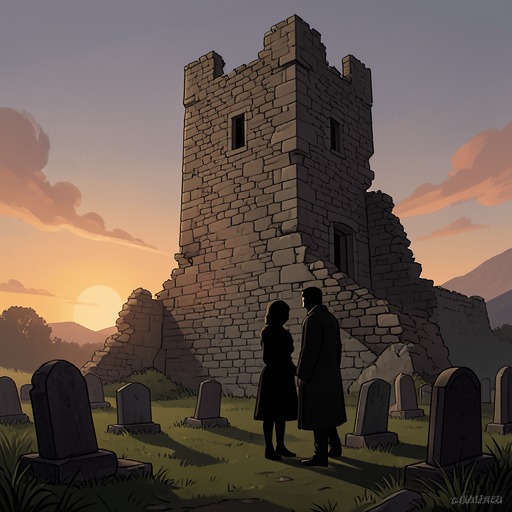
The King's CurseTower Green is the grass within the Tower of London where Margaret Pole was brought to be executed. The move from Tower Hill, beyond the walls, to an improvised block on the grass made the place more than a setting: it turned the execution into a restricted, hurried scene, while the enclosed ground became the site of Margaret’s final resistance to Henry VIII’s authority.
Location and arrangement
Margaret first looks from a low window toward the green and learns that there is no scaffold on Tower Hill. Instead, an order has been given to bring a block and put it on the grass. The distinction matters to her: the expected public execution ground lies beyond the Tower’s walls, while the block on Tower Green places her death inside the fortress where she is held. She understands the arrangement as an execution conducted in hiding rather than on a scaffold.
The block is not part of a prepared platform. When Margaret reaches the Tower door, she sees a small crowd gathered along a straight stone path, with the wooden block set at its end and the headsman standing beside it. The contrast between the path and the makeshift execution place gives the scene its spare, unceremonial character. There is no formal structure to mark the occasion; the block has been brought to the grass, and the condemned woman is led a short distance toward it.
A hurried and restricted execution
The order allows Margaret only an hour and a half before the appointed time of seven in the morning. The early hour and the short notice mean that only a few people have been told, and only a few have come. Among them, Margaret notices the chain of the Lord Mayor of London. The small attendance does not make the execution less consequential; rather, it underscores how little opportunity there has been for intervention or public preparation.
Before leaving her room, Margaret receives a confession and asks the chaplain to go at once to the boys with her blessing and love. She also tells him to keep them away from the windows facing the green and the block. The location therefore shapes the last arrangements between her and her family: the same grass on which she is to die is visible from the boys’ rooms, and she tries to prevent them from watching. She does not look toward the windows as she approaches, unwilling to risk seeing their faces.
Margaret speculates that Henry VIII may have decided on the execution only the previous night, and that the order was sent that morning. This is her inference, not a confirmed account of how the decision was made. What she knows directly is that there has been little notice and that no one has persuaded the king to change course. The hurried use of Tower Green leaves the scene without the larger gathering she had expected and without the time she had imagined might remain to her.
The approach across the green
Margaret does not descend immediately. With her lady-in-waiting’s arm beneath hers, she moves slowly, partly because her legs are stiff and partly because she hopes a royal messenger will arrive with a pardon. The walk gives that expectation time to persist, but at the Tower door there is no messenger. There is only the small crowd, the path, the block, and the headsman. The space brings her hope into direct contact with the execution already arranged there.
As she approaches, Margaret thinks of her will, in which she has ordered that her debts be paid, prayers said for her soul, and her body buried in her old priory. She doubts that her body will be taken there, and considers that she may instead lie in the Tower chapel with her son, Montague. That thought leads her to her grandson Harry Pole, who is also imprisoned in the Tower; she wonders who will care for him and whether he will be released. The green is thus linked, in her thoughts, to the fate of relatives who are not present at the execution but remain caught in the same imprisonment.
Resistance and significance
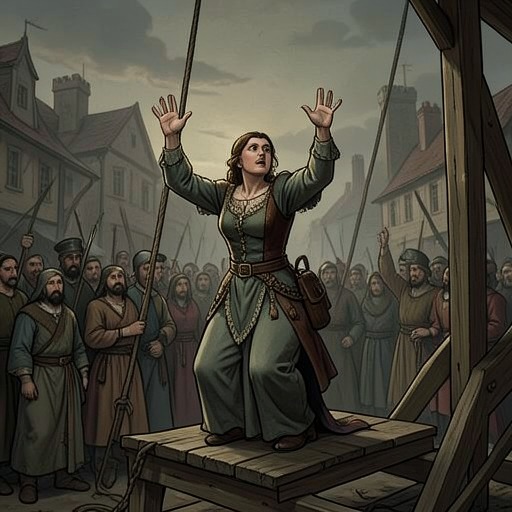
At the block, Margaret initially complies with the headsman’s instructions, then changes her mind and tries to rise. Her refusal continues as the execution proceeds. Tower Green becomes the setting not only for the Crown’s power to confine and kill her, but also for the act by which she refuses to grant that power her consent. The scene’s decisive reversal occurs on the grass itself: the expected final submission gives way to resistance.
The green also gathers the novel’s recurring conflict between individual action and inherited identity into a single place. Margaret reflects that her family has been imprisoned for who they are rather than for what they have done. Her death on Tower Green is therefore presented as part of a broader political vulnerability, not as an isolated punishment. The execution’s restricted audience and makeshift setting contrast with the scale of that consequence: a few people witness the scene, while the family’s history and the question of what will happen to the remaining prisoners extend beyond it.